Environmental, Social & Governance Statements

The Society’s Strategic Plan has clear focus on Environmental, Social and Governance responsibility and we will endeavour to improve the Society’s positive, sustainable, responsible impact on its workplace, members, community and the environment.

The Society continued the implementation of its Environmental, Social and Governance (“ESG”) Plan during 2025.


Climate Change


The Society is mindful of the climate change risks impacting its Investment Portfolio, hence has
worked closely with its Investment Adviser, LGT Wealth Management (LGT), to assess the impact.


LGT prepares an annual sustainability report on the Investment Portfolio, analysing data points and interpreting the overall sustainability score and providing insights into the portfolio’s ESG
characteristics and carbon footprint. 


ESG Sustainability Report


Each quarter, LGT conducts an in-depth review of the assets and companies within the portfolio, ensuring that the report and analysis are both coherent and tailored to our specific needs.  Their perspective is that addressing the global issues we all face is a fundamental responsibility of every business, regardless of industry.


LGT believes financial markets should actively contribute to the global transition toward a more sustainable future for society and the environment.  To uphold this belief, they employ a specialist sustainability analyst team that carries out ongoing due diligence, confirming sustainability credentials and ensuring aligned execution.  


LGT’s ESG Sustainability Report is available below.


2024 Society Impact


There are a number of aspects of the Society’s operation that impacts on the environment and these are defined in the Environmental component of the ESG plan – by way of example, as at 31 December 2024, the Society had two properties, had 12 people on the payroll, has tenants operating within its properties and also works with a number of suppliers and business partners.


The Society’s ESG plan priorities focused on assessing its carbon footprint. The Society has worked with an external firm, Positive Planet, in carrying out that assessment and understanding the options available to it in addressing its carbon footprint.


Using the information the Society provided, the annual carbon emissions were calculated and
measured in three different scopes as noted below.
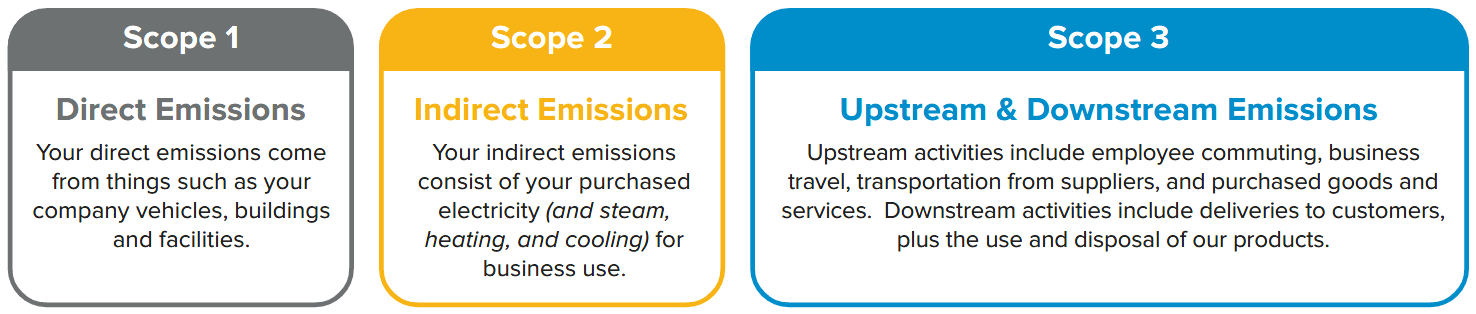
 

Diagram 1


The top-level analysis below demonstrates which activities contribute to the Scope 1, 2, 3 business emissions.


Throughout this analysis, all measurements are given in tonnes of carbon dioxide equivalent (tCO2e).
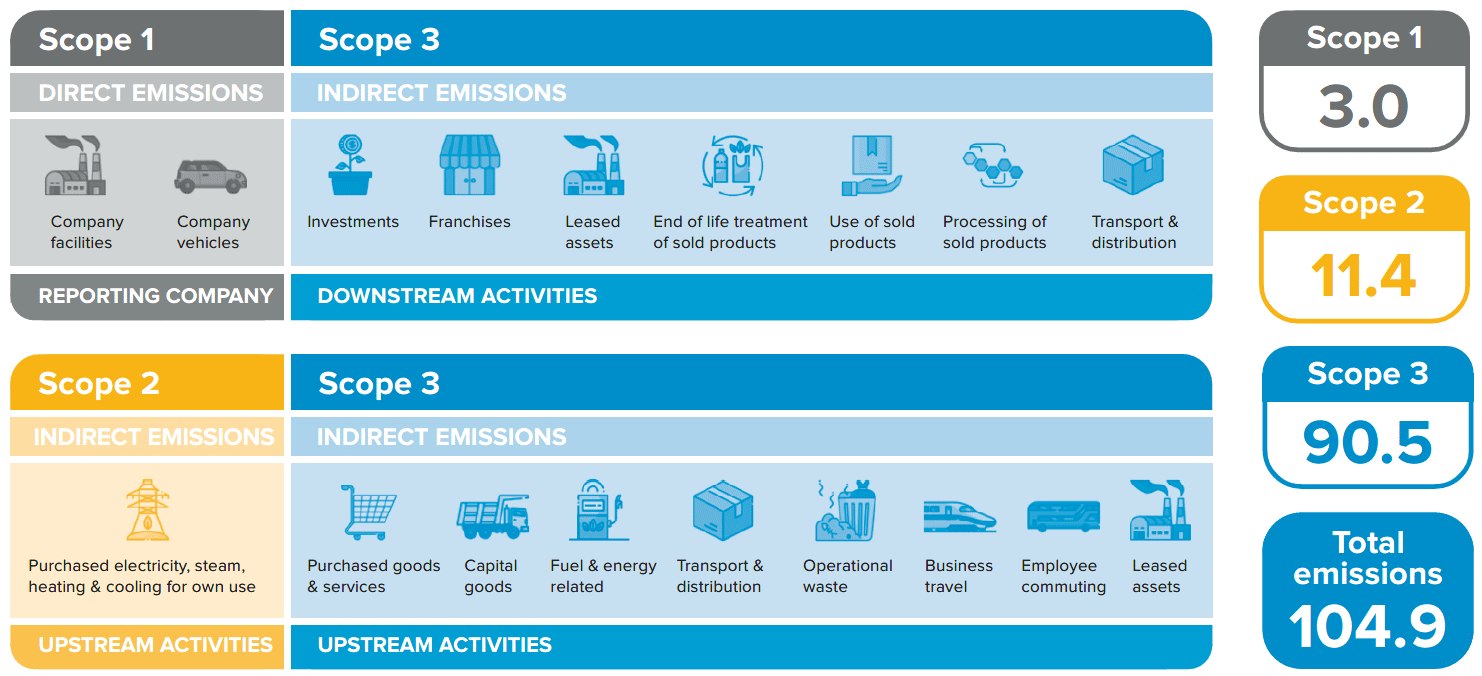
 

Diagram 2


Below is a pie chart which demonstrates the relative contribution (%) of each Scope towards the total carbon footprint.
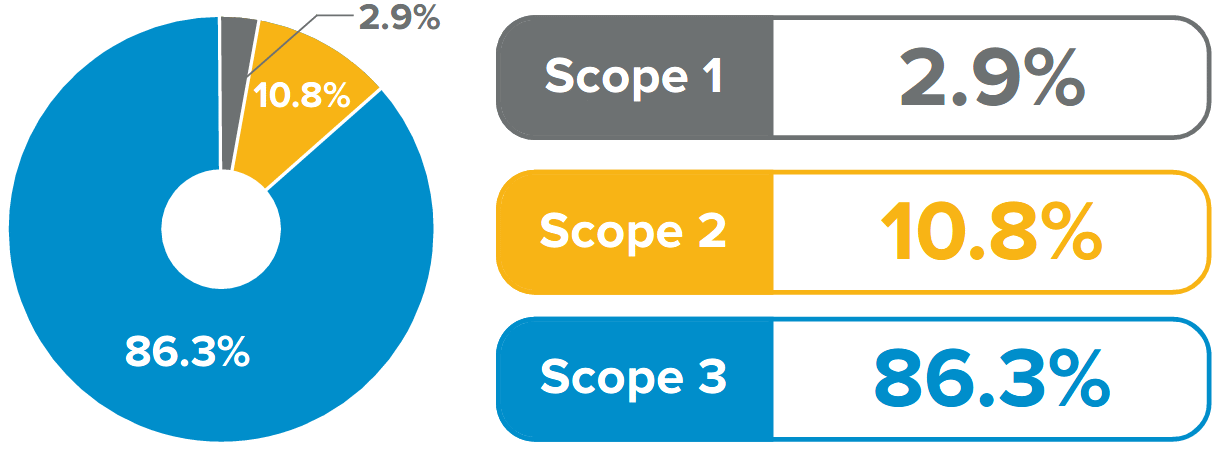
 

Diagram 3


Historic Society Impact


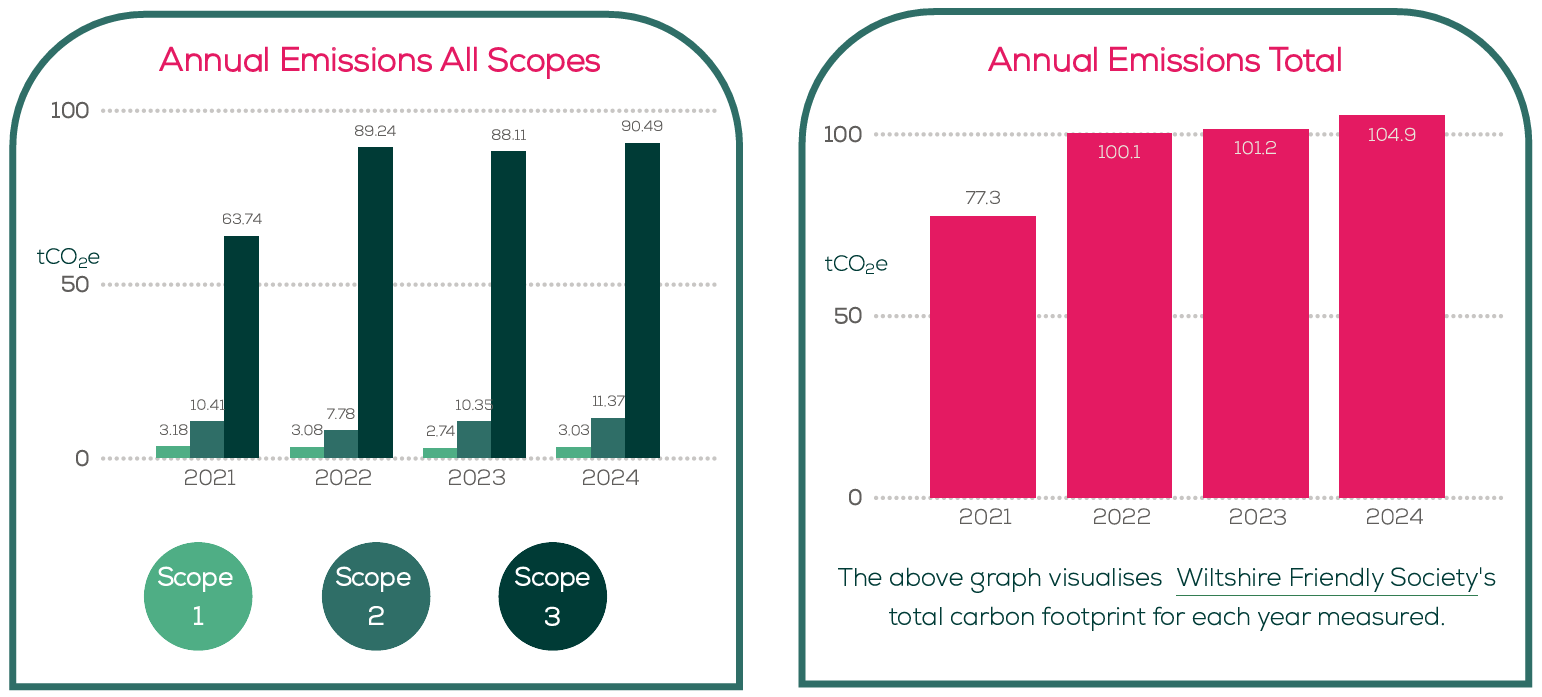
Diagram 4


The increase of our carbon footprint for 2024 against previous years was likely due to:

a) The allocation of energy consumption for unlet, empty suites 2 and 4 at our office, Holloway House, during part of 2024. This increased our Scope 2 emissions.

b) Our increase in spend on Purchased Goods and Services in Scope 3. Because of the nature of the carbon footprint calculation for this area, the more we have spent means we have used more carbon.


It should also be noted that 2021 was a full COVID year and so staff were working from home.